
It’s not too early.
High School Career Pathways in Beauty and Barbering
Local education agencies benefit in many different ways.
Local educational organizations, including school districts and charter schools, can benefit from a partnership with The Institute in several important ways.
Expand career and technical education options. Districts can offer specialized cosmetology and barbering pathways without developing and operating a complete program independently.
Reduce facility and equipment expenses. Students train in an established instructional environment, reducing the district’s need to build salon laboratories, purchase specialized equipment, or maintain program-specific facilities.
Retain attendance funding. Under the proposed partnership structure, districts retain their regular and weighted average daily attendance funding, subject to applicable state funding requirements.
Create opportunities for outcomes bonus funding. Students who meet college-readiness requirements and earn an eligible Level I certificate or associate degree may generate outcomes bonus funding for the district.
Increase access to industry credentials. Students can work toward college credit, an eligible certificate or degree, and the training required to pursue Texas professional licensure.
Strengthen college, career, and military readiness results. Successful completion of approved college courses and credentials may support the district’s broader college, career, and military readiness goals and accountability measures.
Improve student engagement. Applied, career-focused instruction can engage students motivated by hands-on learning and a clear connection between school and employment.
Support graduation and postsecondary planning. A structured one- or two-year pathway gives students a defined plan that connects high school coursework with college education, professional training, and career preparation.
Offer flexible scheduling. Participation may be arranged before school, after school, during an approved release period, through block scheduling, or through another locally approved model.
Preserve existing college partnerships. Districts may use eligible dual-credit courses offered through their current college partner when those courses satisfy the applicable degree and transfer requirements.
Provide industry-focused college instruction. The Institute’s in-house adjunct instructors connect academic content to cosmetology, barbering, business operations, customer service, leadership, and entrepreneurship.
Respond to student and family interest. The partnership allows districts to offer a structured pathway for students with a strong interest in beauty, wellness, barbering, personal care, or business ownership.
Strengthen the local workforce. Students develop technical, professional, and business skills that can prepare them for employment and entrepreneurship in local salons, barbershops, spas, studios, and related businesses.
Create measurable student outcomes. The LEA and The Institute Rockwall can monitor enrollment, attendance, course completion, college credit, credentials, licensure preparation, and program completion.
Share student-support responsibilities. A memorandum of understanding establishes clear responsibilities for attendance reporting, academic progress, student support, safety, communication, transportation, and family engagement.
All funding, credit, accountability, and outcomes-bonus benefits are subject to applicable state requirements, district approval, student eligibility, and the final memorandum of understanding.
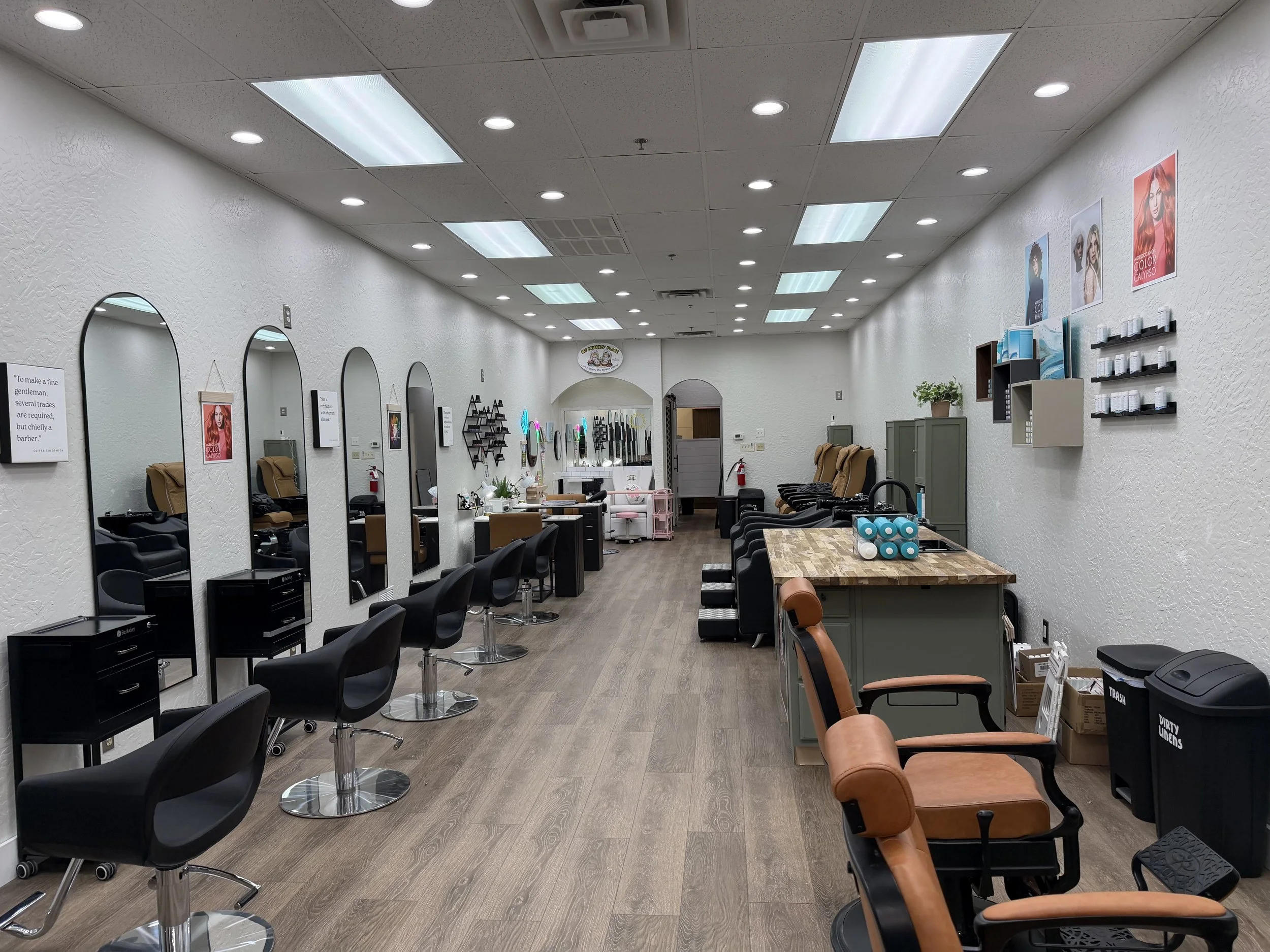
A partnership opportunity for area school districts
The Institute Rockwall invites area school districts to explore a coordinated pathway for eligible high school students interested in cosmetology or barbering. Students learn in a career-focused environment that combines technical instruction, hands-on practice, professionalism, client service, safety, and business fundamentals. The goal is to help students move from career interest to a structured education and licensing pathway while they remain connected to their high school support system.
Why this opportunity matters to students
A visible pathway from a personal interest to a skilled career, professional license, college credential, or entrepreneurship
Hands-on learning in a setting designed to reflect salon and barbershop expectations
Instruction in technical skills as well as communication, customer service, personal branding, leadership, and business operations
An earlier start on postsecondary career preparation for students who thrive in applied learning environments
Starting while in high school with a school district’s support has the potential to save both the student and the school district thousands of dollars
Programs students may explore:
AAS Cosmetology Operator Business Management
Cosmetology operator preparation with management and business coursework through the Institute’s Lamar State College Orange partnership
AAS Class A Barber Management
Class A barber preparation with management and business coursework through the Institute’s Lamar State College Orange partnership
Who may be a good fit:
Students may be strong candidates when they show sustained interest in beauty, wellness, barbering, client service, or entrepreneurship; are ready for a professional learning environment; can meet attendance and conduct expectations; and have family support for the time and financial commitments involved.
Enrollment eligibility:
The Institute’s published admissions information states that students may enroll beginning at age 15. However, the state of Texas does not have an established age for enrollment. Texas licensure candidates must be at least 17 before becoming eligible for licensing. Final eligibility and program placement are confirmed through the Institute’s admissions process.
How Participation Could Work
The Institute proposes a planning conversation with each district rather than a one-size-fits-all arrangement. Together, we can identify an appropriate student referral process, compatible schedules, progress communication, and the approvals required by the district and state.
The Institute can provide:
· Information sessions for district staff, students, and families
· Program and admissions guidance
· Career-focused technical and professional instruction
· Attendance and progress information as permitted and agreed
· A defined contact for partnership questions
The district may coordinate:
· Student identification, counseling, and family engagement
· Local approval for release time, credit, or funding, when applicable
· Transportation planning, if participation occurs during the school day
· A district point of contact for student support
· Alignment with district policies and graduation planning
Additionally, The Institute Rockwall can provide each district with information and assistance on enrolling students in level I and level II courses on campus at the high school with a school district FTE, or virtually through The Institute Rockwall to facilitate a 4-year program of study if this is a need for the district.
Questions to Resolve Together
Which students and grade levels are eligible?
We recommend a one- or two-year pathway for high school students. Ideally, a student would begin the Summer before, or at the beginning of their Junior year.
A highly motivated student may be able to complete an accelerated pathway during the senior year.
The Institute and the participating school district will establish student eligibility and readiness criteria. These criteria may include:
Demonstrated interest in cosmetology, barbering, esthetics, manicuring, or eyelash extension services
Consistent attendance
Academic standing and college readiness, when applicable
Maturity and readiness for a professional learning environment
The ability to accommodate the program within the student’s high school schedule
A commitment to completing the required coursework and practical training
The student referral, application, and approval process will be outlined in the memorandum of understanding between The Institute Rockwall and the school district.
When will students participate in the program?
The Institute can facilitate several scheduling arrangements based on the needs of the participating school district and its students.
Ideally, we would schedule each student for 4 hours per day, 5 days per week. However, we are approved as a hybrid program, and we are able to customize a schedule that works best for the school district and the individual student.
Possible arrangements may include:
Before-school participation
After-school participation
An approved release period during the school day
A block schedule
Another schedule developed in partnership with the district
The final schedule, attendance expectations, instructional calendar, and transportation arrangements will be documented in the memorandum of understanding.
How will tuition, student kits, fees, transportation, and financial assistance be handled?
Tuition is reduced for high school students participating through an approved district partnership.
Under the proposed partnership model, school districts will retain their regular and weighted average daily attendance funding. A district may choose to cover the cost of tuition for students. If a student enrolls in academic transfer courses through Lamar State College and is FAST eligible, they will not pay for tuition, fees, or textbooks., The financial and operational responsibilities of both parties will be established in the memorandum of understanding.
The agreement will address:
High school student tuition for The Institute Rockwall and LSCO
Student kits, equipment, uniforms, and supplies
Application and program fees
Payment responsibilities and schedules
Transportation responsibilities
Available financial assistance
Procedures for students who withdraw or change programs
Students and families will receive clear information about program costs and responsibilities before enrollment.
Will students receive high school credit and college credit?
The participating school district will award the applicable high school credit and identify the college courses on the student’s transcript.
The specific credits, course codes, documentation requirements, and transcript procedures will be established by the district and included in the partnership agreement.
Students who meet college-readiness requirements and earn an eligible Level I certificate or associate degree may generate outcomes bonus funding for their school district, subject to applicable state requirements.
This structure can benefit both students and districts by helping students complete high school with meaningful progress toward a professional license, college credential, and career.
Can academic courses for the associate degree be completed through the district’s current college partner?
Yes.
The Institute’s academic courses are taught by in-house adjunct instructors. These courses use content, assignments, and examples focused on the cosmetology and barbering industries. This approach helps students connect subjects such as business, communication, leadership, and management directly to their chosen profession.
However, a district may choose to provide eligible academic courses through its existing dual-credit college partner when that arrangement works better for its students.
Courses completed through another college must satisfy the degree requirements and transfer requirements established by the college awarding the credential. The district, The Institute, and the applicable college partner will review course equivalencies before students enroll.
How will attendance and academic progress be monitored?
The Institute will maintain attendance and progress records for participating students. Reporting schedules, attendance requirements, progress measures, and procedures for addressing concerns will be established in the memorandum of understanding.
The Institute will communicate with:
The participating student
The district representative designated in the memorandum of understanding
Other authorized personnel when permitted by the agreement and applicable law
Because students are participating in a college program, The Institute Rockwall will communicate directly with the student and the designated district representative regarding attendance, coursework, practical training, and academic progress.
How will student support and safety be coordinated?
The Institute and the participating district will work together to establish clear expectations for student conduct, safety, attendance, and professional behavior.
The memorandum of understanding will identify:
The district and Institute points of contact
Attendance and progress-reporting procedures
Safety and professional conduct expectations
Procedures for addressing academic or behavioral concerns
Student-support responsibilities
Emergency communication procedures
Appropriate information-sharing practices
Students will be expected to follow the policies of The Institute while participating in the program, in addition to any applicable district requirements.
How will families receive information?
Family communication will be determined and managed locally by the participating school district.
The district may choose to provide families with information about:
Program eligibility
Scheduling
Transportation
Tuition and related costs
High school and college credit
Student attendance and progress
Program expectations
Available support
The Institute can participate in district-approved information sessions for students and families and can provide current program, admissions, tuition, and enrollment information.
As a college program, The Institute will communicate directly with the student and the district representative identified in the memorandum of understanding. The district will determine how information is shared with parents and guardians in accordance with its local policies and applicable law.
Establishing a District Partnership
Each partnership will be designed around the district’s career-readiness goals, student needs, scheduling requirements, and existing dual-credit relationships.
The recommended planning process includes:
District discovery meeting
District and Institute representatives identify the students to be served, desired programs, scheduling options, approval requirements, and partnership goals.
Program and course review
The parties review program requirements, course sequences, costs, student kits, transportation, dual-credit options, student support, and expected completion timelines.
Academic alignment
The district and The Institute determine how high school credit, college coursework, existing dual-credit courses, and transcript documentation will be handled.
Memorandum of understanding
The parties document student eligibility, responsibilities, schedules, financial arrangements, transportation, communication procedures, credit, academic reporting, and measures of success.
Student and family outreach
After district approval, eligible students and families receive program information and guidance regarding application, enrollment, scheduling, costs, and expectations.
Start a Conversation!
The Institute Rockwall Cosmetic Art and Science welcomes the opportunity to work with area school districts to create meaningful career pathways for high school students.
Our goal is to help students move from career interest to structured technical education, college coursework, professional licensing preparation, and long-term opportunity in the beauty and barbering industries.
Email: info@instituterockwall.com
Website: www.instituterockwall.com
Program offerings, schedules, admissions requirements, tuition, credit arrangements, funding eligibility, transportation responsibilities, and licensing requirements will be confirmed through the applicable agreements before students enroll.